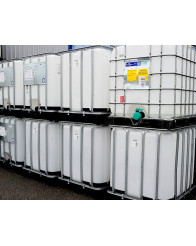
Installing a 1,000-litre tank allows you to collect and store a significant amount of rainwater without requiring a lot of space.
It is commonly used for rainwater harvesting, by connecting it to a downpipe so that the collected water can then be used to fill a watering can, supply a hose or certain outdoor equipment.
The installation remains accessible to private individuals, but it requires a few precautions. A full tank contains around one tonne of water, so choosing the right location, preparing the ground and ensuring the stability of the support are essential.
Here are the main steps to know before installing a 1,000-litre water tank.
Where should you install a 1,000-litre tank?
The location should be chosen before filling the tank. For rainwater harvesting, the ideal solution is to install it close to a downpipe.
The tank should also remain easily accessible. You must be able to reach the valve, tap, top cap, filter and overflow outlet for inspections and maintenance.
For an installation intended for garden watering, also consider the distance between the tank and the area where the water will be used. The longer the hose, the greater the pressure loss may be when the water is used only by gravity.
A translucent tank can also be installed in the shade or protected from sunlight. This helps limit algae growth in the stored water.
How should you prepare the ground for a 1,000-litre tank?
A 1,000-litre tank filled with water represents around one tonne of water, in addition to the weight of the tank itself. The support must therefore be flat, stable and strong enough to support this load over time. A concrete slab is a common solution.
Before installation, check that:
- The surface is perfectly level
- The entire base of the tank rests correctly on the support
- The ground is not likely to sink under the load
- No sharp or protruding elements can damage the pallet or the bottom of the tank
- Rainwater flowing over the ground will not damage the support
A tank may appear stable when empty but gradually become unbalanced as it fills. Ground preparation is therefore an important step that should not be overlooked.
Should you raise a 1,000-litre tank?
Slightly raising the tank makes it easier to access the tap and allows water to flow more easily by gravity. It also makes it easier to place a watering can or container underneath the tap.
However, this raised installation must be planned from the outset. The support must be able to safely hold more than one tonne over time without moving, cracking or sinking.
Avoid placing the tank on an unstable support or directly on soft ground. The higher the tank is raised, the more important it is to ensure the stability of the installation.
If gravity flow does not provide sufficient pressure, an appropriate pump can be added.
Can a 1,000-litre IBC tank be buried?
A standard IBC tank should not be buried unless it has been specifically designed for underground installation.
An above-ground tank is mainly designed to withstand the pressure exerted by the water it contains. An underground tank must also withstand the pressure of the surrounding soil, ground movement and potentially rising groundwater.
For an underground installation, you should therefore choose a tank specifically designed to be buried and follow the manufacturer’s recommendations regarding excavation, base preparation, backfilling and any required anchoring.
A rainwater harvesting tank designed to remain above ground should be installed on a suitable support and should not be buried.
How do you connect a 1,000-litre tank to a gutter?
To collect water from a roof, the tank is generally connected to a downpipe using a rainwater collector.
The collector captures part of the rainwater flowing down the gutter and directs it into the tank through a hose. It should be installed at a suitable height in relation to the tank inlet and the system being used.
Before connecting the system, check that the diameters of the gutter, hose and fittings are compatible. The hose should allow water to flow correctly without being bent or crushed.
It is preferable to position the tank close enough to the downpipe to keep the connection simple, while leaving enough space to access the different components.
How should you filter the water before it enters the tank?
Water flowing over a roof carries leaves, moss, dust and various types of debris. Filtering the water before it enters the tank helps limit their accumulation inside the tank.
Depending on the installation, several types of equipment may be used: a gutter guard, a screen, a filter integrated into the collector or a filter installed before the tank inlet.
The filter should remain accessible so that it can be inspected and cleaned regularly. A clogged filter can significantly reduce the amount of water flowing into the tank.
Filtration also helps reduce sediment at the bottom of the tank and prevents the tap, hoses or any pump from becoming clogged.
Why should you install an overflow outlet?
Once the tank reaches its 1,000-litre capacity, any additional water must be able to drain away. The overflow outlet directs this excess water to a suitable location instead of allowing it to overflow around the base of the tank.
It should remain accessible so that its proper operation can be checked regularly.
Which tap and fittings should you install on an IBC tank?
An IBC tank is generally fitted with a valve at the bottom. Depending on the intended use, different accessories can be connected to it: a tap, garden hose, quick connector, irrigation system or pump.
Dimensions and threads can vary from one tank to another. Before choosing tank accessories, check the type and dimensions of the valve.
During installation, also check the seals and make sure the fittings are watertight. There is no need to overtighten the components, as this could damage the valve or its thread.
For simple garden use, a tap installed on the lower outlet will generally allow you to fill a watering can directly or connect a hose.
How do you commission a rainwater harvesting tank?
Once the tank is installed and all connections have been completed, carry out an initial inspection before filling it completely.
If possible, begin with a partial fill. Check the stability of the support and look for any leaks around the valve, tap and different fittings.
Also check:
- That the water flows correctly from the gutter
- That the filter does not obstruct the flow
- That the fittings remain watertight
- That the tank remains perfectly stable while filling
- That the overflow outlet works correctly when the maximum level is reached
After the first heavy rainfall, another inspection will help confirm that the support has not moved and that all components are working correctly.
Can several 1,000-litre tanks be connected together?
Several 1,000-litre tanks can be connected together to increase the available storage capacity. For example, two tanks can provide a theoretical storage capacity of 2,000 litres.
The tanks can be connected at the bottom so that their water levels balance out. Other configurations may also be used depending on the rainwater harvesting system chosen.
In all cases, the tanks must be installed on properly prepared supports and at compatible heights. The connecting hoses must also have a suitable diameter to allow water to flow between the different tanks.
The total weight must be taken into account when preparing the ground. Two full tanks represent around two tonnes of water, while three tanks represent around three tonnes.
A 1,000-litre rainwater tank therefore allows you to start with an initial storage volume and add another tank later if your needs increase.
What mistakes should you avoid when installing a 1,000-litre tank?
Installing the tank on soft ground
A full tank places a significant load on a relatively small surface area. Ground that has not been properly prepared may sink and destabilise the installation.
Burying a standard IBC tank
An above-ground tank is not designed to withstand the pressure of the surrounding soil. Use a tank specifically designed for underground installation.
Forgetting the overflow outlet
The tank will eventually reach its maximum capacity. Without a suitable drainage system, the water may overflow around the base of the installation and weaken the support.
Not filtering the water coming from the roof
Leaves and other debris may accumulate inside the tank and gradually clog the fittings and hoses.
Raising the tank on an inadequate support
A structure that appears strong enough for an empty tank may not be able to support a load of more than one tonne. The support must be sized accordingly.
Buying fittings without checking the valve
Outlet sizes can vary between different IBC tank models. Before choosing accessories, check the type of valve and its thread.
Making the equipment difficult to access
The filter, tap, valve, overflow outlet and cap should remain accessible for maintenance and inspections.
How should you maintain a tank after installation?
A rainwater harvesting installation requires a few regular checks. Inspect the condition of the tank, the stability of the support, the watertightness of the fittings and the correct operation of the overflow outlet.
The filter and gutters should also be cleaned whenever they become clogged with leaves or other debris.
Before periods of freezing weather, hoses, taps and other exposed components require particular attention. Depending on the tank model and weather conditions, partial or complete draining may be necessary. Follow the manufacturer’s recommendations.
In summary
Installing a 1,000-litre tank for rainwater harvesting first requires preparing a suitable location. The tank must rest on a flat surface that is strong enough to support more than one tonne when full.
The connection system should then include an inlet from the gutter, filtration, an overflow outlet and a water outlet fitted with a suitable tap or connector.
An IBC tank intended for above-ground use should not be buried unless it has been specifically designed for that purpose. Finally, all fittings should be checked during the initial filling process and regularly throughout use.
Once these precautions have been taken, a 1,000-litre tank provides a simple solution for storing rainwater and keeping a reserve available for outdoor uses.
To learn more, discover our videos:
▶ Watch our first video about installing and using a water tank
▶ Watch our second video dedicated to water tanks and their equipment