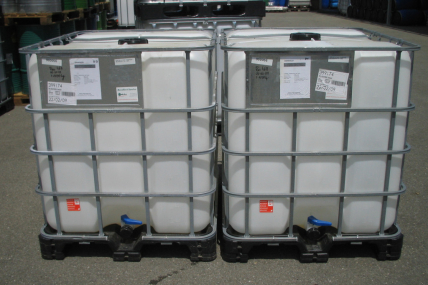
A 1,000-litre tank is particularly practical for collecting rainwater, but its industrial appearance is not always easy to integrate into a garden, on a terrace, or near a house.
An IBC tank generally consists of a plastic container surrounded by a metal cage. Its size and shape make it fairly conspicuous. However, there are several simple ways to hide a water tank without interfering with its operation: wooden cladding, privacy screens, reed or bamboo screening, vegetation, trellises, or a small shelter.
The aim is not purely aesthetic. Well-designed cladding can also help protect the tank from light while maintaining easy access to its various components.
Why hide or cover a 1,000-litre tank?
The main reason is usually aesthetic. An IBC tank is around one metre high and takes up a significant amount of space. When placed against a wall, near a terrace, or in the middle of a garden, it can quickly become very noticeable.
Cladding helps the tank blend more naturally into its surroundings, particularly by using materials already present in the garden, such as wood, plants, decorative panels, or screening.
Hiding a tank also offers another benefit: reducing its direct exposure to light.
When the walls of a tank allow light to pass through, this can encourage algae growth in the stored water. Placing the tank in the shade or using opaque cladding can therefore help limit this phenomenon.
However, this should only be considered a complement to regular maintenance: gutters, filters, fittings, and the tank itself should always be checked regularly.
Build wooden cladding around the tank
Wooden cladding is one of the most common solutions for hiding a rainwater harvesting tank.
It can be made from wooden boards, battens, or panels designed for outdoor use. One of the main advantages is that the enclosure can be built precisely to match the dimensions of the tank.
The cladding can also be matched to a terrace, garden shed, or existing fence.
However, it is best not to completely enclose the tank.
Leave enough space between the tank and the cladding so that you can inspect its condition and access the connections. A removable front panel or a door, for example, makes it easy to reach the tap and valve.
Any wood used outdoors should also be suitable for moisture and weather exposure.
Install a privacy screen in front of the tank
For a simpler installation, it is not always necessary to build a complete enclosure.
A privacy screen placed in front of the tank may be enough to hide it from the main viewpoints in the garden.
This solution offers several advantages:
- it requires relatively little work
- it allows air to circulate
- the tank remains easily accessible from the sides
- the screen can also be used as a support for climbing plants
However, make sure that the screen is securely fixed. A full tank is very heavy, but the panel hiding it is still exposed to wind and therefore needs its own support structure.
Use reed or bamboo screening
Reed or bamboo screening is another easy-to-install solution.
Made from bamboo, reed, or certain synthetic materials suitable for outdoor use, it can be attached to a small structure or fence positioned in front of the tank.
This option is useful when you want to quickly hide a 1,000-litre water tank without building a complete enclosure.
However, it is best to avoid attaching the screening directly to the plastic container or to any parts that need to remain movable or accessible.
Also leave some space between the cladding and the tank so that it can be inspected easily.
Choose openwork panels
Openwork panels offer an effective compromise between appearance, visual screening, and ventilation.
They are available in many styles, including wood, metal, decorative panels, and geometric designs.
Unlike a fully enclosed structure, the openings allow air to circulate around the tank.
They can also be used as a support for creating a planted decorative feature around the installation.
For example, three panels can be installed around the tank while leaving the rear or one side accessible for maintenance.
Install a trellis with climbing plants
To integrate the tank more naturally into the garden, you can install a trellis in front of or around it.
A climbing plant can gradually conceal the tank and turn this technical area into a landscaped feature.
However, the trellis should have its own support structure. The weight of the plants should not be supported directly by the tank or its connections.
You should also take the future growth of the plants into account.
Vegetation that becomes too dense can eventually make it difficult to access the top cap, tap, or filter. Regular pruning helps maintain sufficient access.
Hide the tank with a hedge or plants
A small hedge, shrubs, or potted plants can also be used to hide an IBC tank.
This solution is particularly suitable when the tank is located at the edge of a garden or against a fence.
Before planting, however, make sure you leave enough space between the plants and the tank.
The aim is to remain able to move around the tank in order to:
- check the fittings
- clean the equipment
- reach the tap
- check the overflow
- intervene in the event of a leak
Also be careful with thorny plants or hard branches that could rub against the plastic container or pipes.
Build a small shelter for the tank
For a more complete solution, you can build a small shelter around the tank.
It can be designed to look like a garden storage box or a small utility enclosure.
The main advantage is that it can visually conceal several sides of the tank while also allowing you to add a roof.
However, the shelter should not become a completely inaccessible enclosure.
Ideally, provide:
- a door or removable panel
- access to the top cap
- an opening around the tap
- space for pipes
- a clear outlet for the overflow
- sufficient ventilation
The structure should also be independent of the tank.
Choose an opaque or dark-coloured tank from the outset
If the installation has not yet been completed, another option is to choose a tank from the outset with walls that reduce the amount of light passing through.
An opaque or dark-coloured tank can be more discreet visually and reduce the water's exposure to light. However, this does not eliminate the need for proper installation precautions.
A full 1,000-litre tank contains approximately one tonne of water. It should therefore always be installed on a flat, stable, and sufficiently strong base.
Why protect a tank from light?
Light can encourage algae growth in stored water, particularly when the tank is translucent. Opaque cladding, positioning the tank in the shade, or choosing a dark-coloured tank can help reduce exposure to light.
This is particularly relevant for a rainwater harvesting system intended to store water for several weeks.
Protection from light does not, however, replace filtration and maintenance. Leaves, moss, and other debris coming from the roof should, as far as possible, be filtered before entering the tank.
Which access points must remain available?
Whatever solution you choose, the cladding should never interfere with the operation or maintenance of the tank. Several areas must remain accessible.
The top cap
It may be necessary to open the top of the tank for inspection or certain maintenance operations.
Avoid placing a fixed roof too close to the cap.
The tap and valve
They should remain easy to reach, particularly when connecting a hose or filling a watering can.
A small access door in the cladding can make this easier.
The fittings
The connections between the gutter, the tank, and the other components must remain accessible for inspection.
A leak is much more difficult to detect if all the fittings are enclosed behind permanent cladding.
The overflow
The overflow must never be blocked or obstructed by the cladding.
When the tank is full, excess water must be able to drain away correctly.
Use removable cladding
When building an enclosure, it can be tempting to make the entire structure permanent.
However, a removable design is much more practical.
For example, you can use:
- a hinged front panel
- panels fixed with screws rather than glue
- a small door
- a removable side panel
This makes inspections easier and also allows you to replace a fitting, tap, or pipe without having to dismantle the entire structure.
Why maintain good ventilation?
A tank does not need to be completely sealed inside an enclosure in order to be hidden.
On the contrary, maintaining airflow around the structure helps the external surfaces dry and reduces moisture build-up around the materials used for the cladding.
A gap of a few centimetres between the tank and the panels, together with openwork sections, is generally preferable to a fully enclosed structure. This is also useful for wooden cladding exposed to rain.
Can you paint an IBC tank directly?
Painting the plastic container of an IBC tank directly is generally not the simplest solution.
IBC containers are often made from plastic to which standard paints do not adhere easily. Due to temperature changes, UV exposure, and handling, the paint may eventually flake or peel off.
If you still want to paint a tank, you should check the exact material it is made from and choose a preparation method and paint that are specifically compatible with that surface.
You should also avoid covering any labels or markings that need to remain visible and should not paint moving parts, taps, caps, or fittings.
In most cases, a separate screen, suitable cover, privacy panel, or wooden enclosure is easier to maintain and modify.
Which solution should you choose to hide a 1,000-litre tank?
The choice mainly depends on the tank's location and the result you are looking for.
For a quick solution, reed or bamboo screening or a privacy panel may be sufficient. In a landscaped garden, a trellis combined with climbing plants can create a more natural appearance.
For a terrace or an installation close to the house, wooden cladding or a small shelter generally provides a more polished finish.
Whatever the solution, choose an installation that allows you to continue accessing the tank easily.
Summary
Hiding a 1,000-litre tank helps a rainwater harvesting system blend more naturally into a garden while also helping reduce the tank's exposure to light.
Wooden cladding, privacy screens, reed or bamboo screening, openwork panels, climbing plants, hedges, or a small shelter can all be used.
However, aesthetic considerations should never interfere with maintenance. The cap, tap, fittings, and overflow must remain accessible. Removable cladding positioned slightly away from the water tank and providing sufficient ventilation is generally preferable to a fully enclosed structure.